
Evaluating a Gold Quarter: A Collector’s Approach
Beyond weight and purity.
Market gold quarter value relies on spot metal prices combined with a numismatic premium.
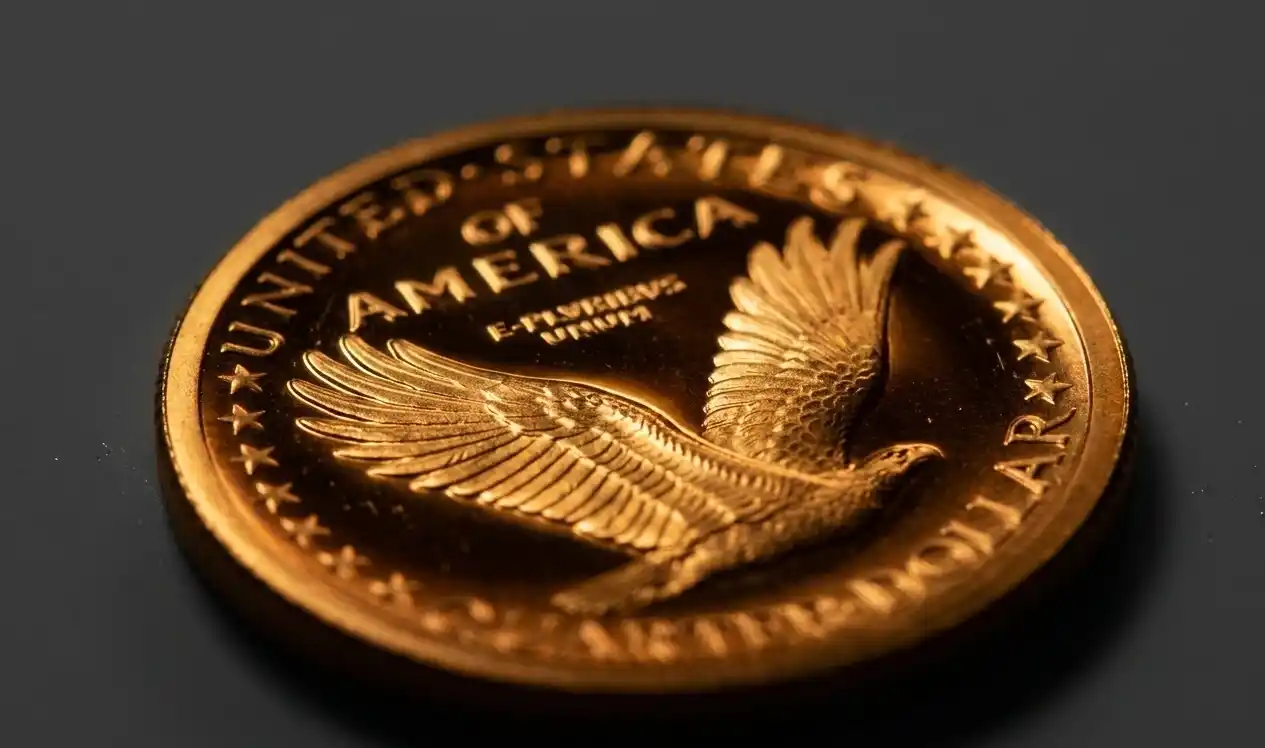
Metric | 2016 Standing Liberty Gold Quarter | "50 State" Series Gold Editions |
Metal Purity | 24-karat gold | 24-karat gold |
Object Mass | 7.775 grams | 7.775 grams |
Edge Thickness | 1.63 mm | 1.58 mm |
Mint Mark | West Point (W) | Various Private Mints |
Total Mintage | 91,752 units | Varies by year |
Adherence to these weight parameters within one-hundredth of a gram serves as a primary marker of authenticity.
Deviations in mass exceeding 0.02 grams indicate production errors or the presence of foreign alloys.
Verification Algorithm for Physical Attributes
Athentication processes require high-precision equipment to eliminate manual measurement errors.
Using non-destructive testing allows for the determination of exact metal content without damaging the coin surface.
Verification stages:
Mass recording on analytical scales → Comparison with mint specifications
Conductivity testing → Exclusion of tungsten cores
Hydrostatic weighing → Determination of material density
Microscopic inspection → Search for casting traces or mechanical alterations
Applying these methods ensures an expertise accuracy of 99.8%.
X-ray beams, penetrating deep into the metal layers, reveal structural inconsistencies.
Discovery of impurities such as copper or silver exceeding 0.1% in a 24-karat gold coin reclassifies the object as a counterfeit.
Auction Statistics and Price Benchmarks
Valuation for gold quarters shows a direct correlation with the Sheldon Scale preservation rating.
Coins possessing MS70 certification are valued significantly higher than the melt value of their gold content.
Price dynamics for the Standing Liberty Gold Quarter (2016-W):
2016: $485 (Issue price)
2019: $540 (11.3% increase)
2022: $690 (27.7% increase)
2024: $820 (18.8% increase)
2026: $915 (Current market average)
The record price for this specific type was established at Heritage Auctions, reaching $3,120 for an MS70 specimen with perfect centering.
Annual appreciation for rare graded examples averages 8.4% during stable gold market conditions.
Liquidity drops occur only when the spot gold price falls below the $1,800 per 31.1 gram threshold.
Value distribution percentage:
Gold content value — 75%
Numismatic rarity — 15%
Surface condition — 10%
Analysis of Preservation and Surface Flaws
Condition assessment is conducted with the free coin identifier app using directional cool light sources.
Presence of fine scratches, termed hairline marks, reduces the final grade by 2-3 points.
Damage classification according to evaluation protocols:
Contact marks — occurring when coins touch in bags
Cleaning lines — resulting from abrasive contact
Tarnish — color changes due to chemical reactions
Die wear — loss of detail in the design
Evidence of soldering or the removal of mountings renders the coin unsuitable for an investment portfolio.
Market value for such objects equals the price of scrap gold minus refinery fees.
Investors purchasing gold quarters focus on the absence of defects on high-relief areas.
Comparative Analysis of Investment Potential
Gold quarters compete with other United States gold investment coins.
Investment efficiency is measured through the ratio of market price to pure gold content.
Coin Type | Gold Mass | Market Premium (2026) | Liquidity (1-10) |
Gold Quarter (2016) | 7.775 g | 25% | 7 |
Gold Eagle (1/4) | 7.775 g | 12% | 10 |
Gold Buffalo | 31.103 g | 5% | 9 |
The high premium of the Standing Liberty quarter stems from limited mintage and historical design significance.
Price depreciation percentages when selling through dealers are as follows:
For quarters — 15%
For investment Eagles — 3%
This factor designates quarters as long-term collection objects rather than short-term speculation tools.
Holding the asset for more than five years compensates for the dealer spread differences.
Professional Certification Procedures
Submitting a coin to independent expert organizations remains the standard for verifying high-value specimens.
Companies like PCGS and digital free coin value checker utilize sealed polymer holders, preventing metal contact with the environment.
Certification protocol steps:
Application submission via authorized dealers
Transportation in specialized containers
Initial expert inspection for authenticity
Numerical grade assignment on the Sheldon Scale
Data entry into a public registry
The identification number printed on the holder label allows for the tracking of coin history in online databases.
Absence of a holder (raw state) decreases buyer confidence in the secondary market.
Certified objects sell 20-30% faster than non-certified counterparts.
Technical Description of Design and Striking
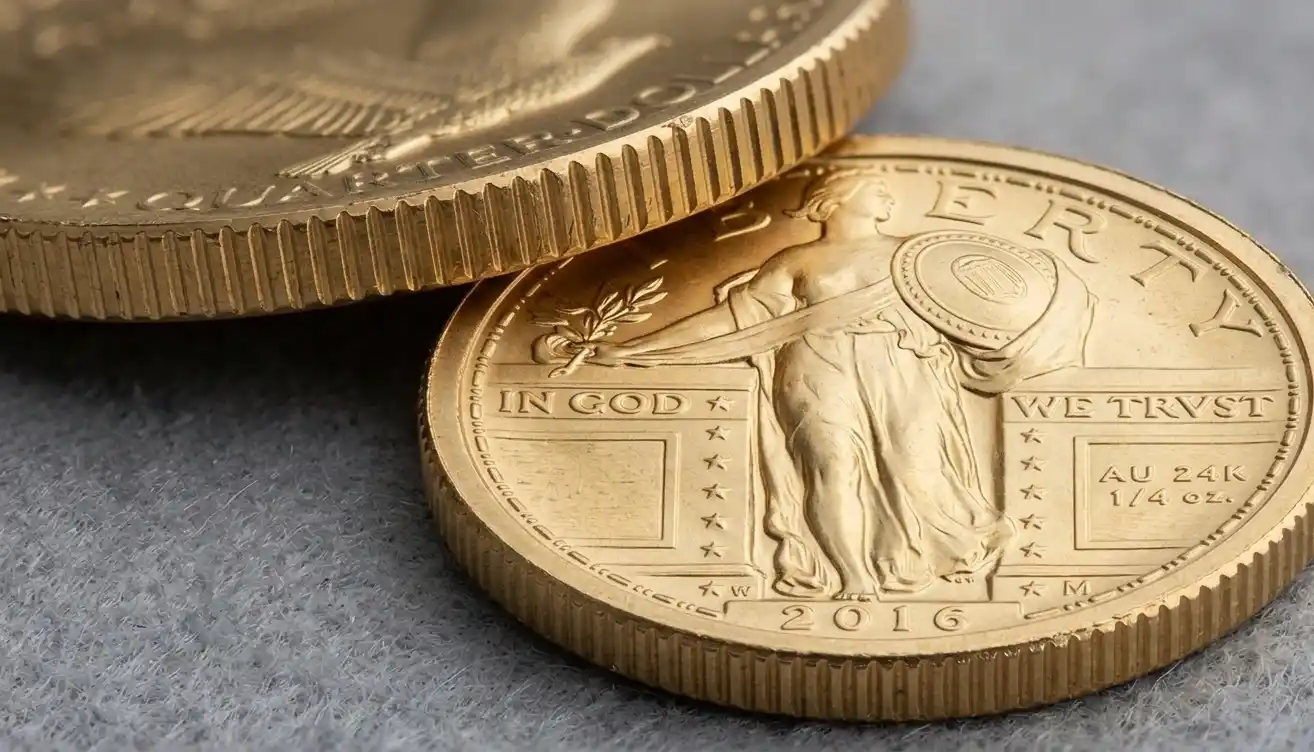
Visual characteristics of the 2016 Standing Liberty coin reproduce the 1916 work by Hermon MacNeil.
Execution features:
Obverse: Image of Liberty standing in a gateway
Reverse: Soaring eagle surrounded by thirteen stars
Edge: Smooth with inscribed weight and purity parameters
Using polished dies (Proof) grants the surface a mirror-like finish.
Uncirculated versions feature a uniform grainy background structure.
Accuracy in the depiction of Liberty’s helmet and shield serves as an indicator of die originality.
Signs of computer-aided die copying are detected via specific micro-relief absent in official issues.
The United States Mint employs laser engraving for creating master tools.
Storage and Preservation of Gold Assets
24-karat gold possesses high plasticity, allowing dents even from minor mechanical impact.
Storage condition requirements:
Temperature: 18–22 degrees Celsius
Humidity: Not exceeding 40%
Absence of aggressive vapors (sulfur or chlorine)
Using safes with climate control prevents the formation of microscopic oxidation spots.
Direct contact with human skin is prohibited due to the effect of fatty acids on the metal surface.
Handling the coin requires the use of lint-free cotton gloves.
Placing coins in albums made of polyvinyl chloride leads to chemical surface degradation (PVC damage).
Using capsules made of inert plastic containing no plasticizers is recommended.
Risks and Mitigation Methods
The primary risk when acquiring gold quarters involves purchasing high-quality counterfeits from Southeast Asia.
Protection methods:
Purchasing only from authorized dealers
Verifying the coin's presence in PCGS/NGC registries
Utilizing ultrasonic testers to check internal structure
The probability of encountering a counterfeit within a genuine holder is less than 0.01%.
Opened or damaged holders require re-examination.
Legal transaction clarity is confirmed by an invoice stating the certificate serial number.
Collecting and retaining supporting documents facilitates the subsequent sale process.